
News & Events
-
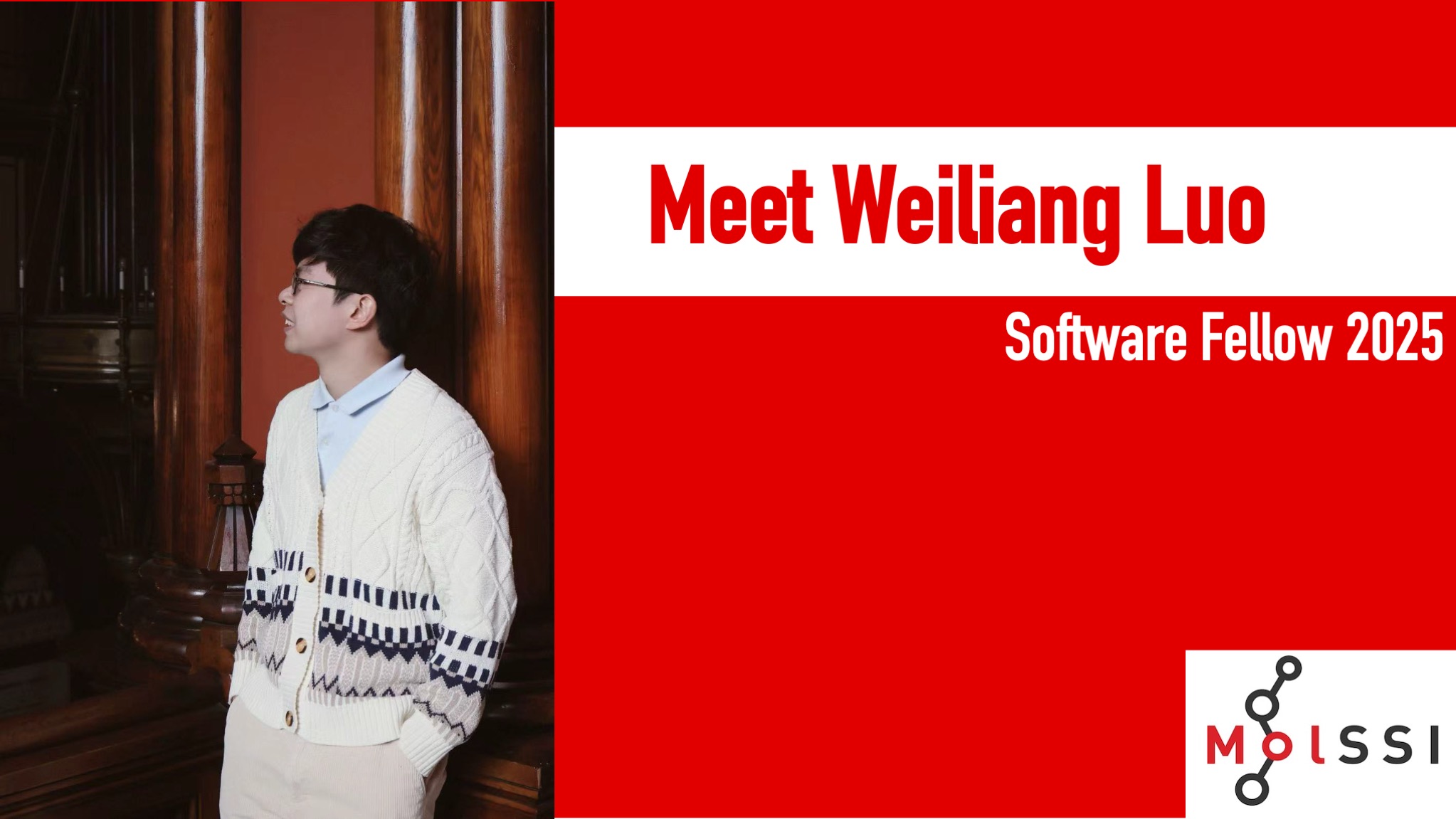
Reimagining Enzymatic Catalysis Simulation in the Age of AI
Weiliang Luo’s interest in molecular science started early, sparked by a periodic table tucked into the back of a dictionary. What began as curiosity—wondering how matter is arranged and transformed—quickly deepened through hands-on exposure to simple experiments and vivid chemical reactions that felt almost magical. Today, that curiosity drives his research at MIT, where he
-

ACT-CMS Opens 2026 Faculty Fellowship Applications
The Accelerating Curricular Transformation in the Computational Molecular Sciences (ACT-CMS) program is pleased to announce that the 2026 round of Faculty Fellowship applications is now open. ACT-CMS is an education and faculty development program from MolSSI. The goal of ACT-CMS is to transform science curricula by accelerating the integration of programming and computation into existing molecular
-
MolSSI Launches New Udemy Course: C++ Project Management with CMake, CPack, and Beyond
The Molecular Sciences Software Institute (MolSSI) is proud to announce the release of a new Udemy course: C++ Project Management: CMake, CPack, and Beyond, created by MolSSI Software Scientist Taylor Barnes. Becoming an expert C++ software engineer requires much more than writing code. Successful developers also need to navigate the complex world of compilers, build systems, package
-
Learn Quantum Chemistry Simulation with MolSSI’s New Credentialed Online Course
Are you an early-career graduate student or researcher new to quantum chemistry and looking to expand your skillset? Have you ever attended a MolSSI training and wished you had a credential to show off on your professional profiles? We have good news for you! The Molecular Sciences Software Institute (MolSSI) has launched its first self-paced
-
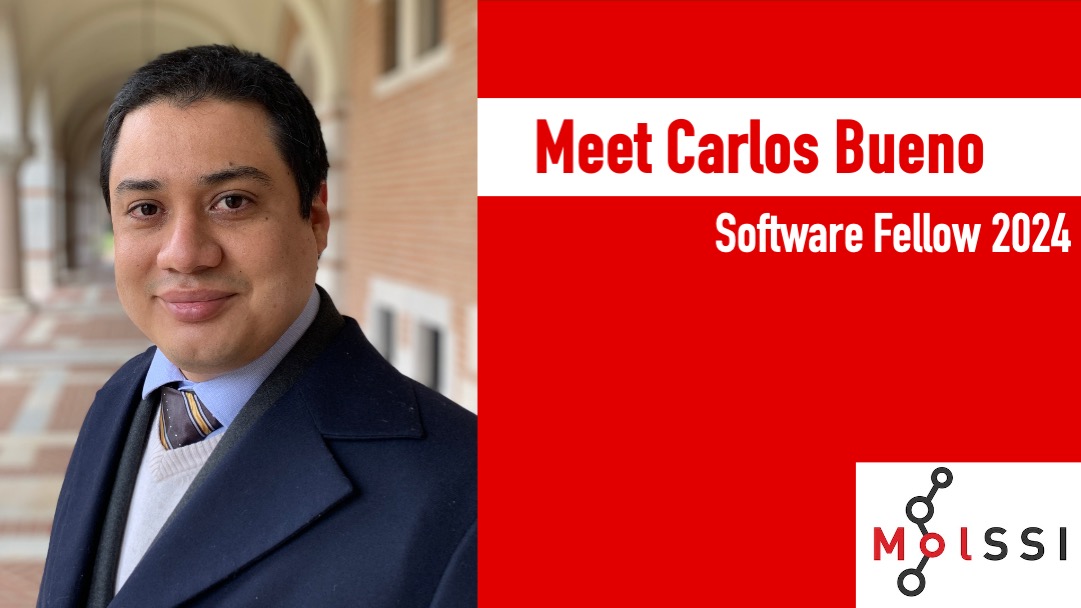
Carlos Bueno: Designing Scientific Software for Modeling Molecular Complexity
Early Steps in Computational Science Dr. Carlos Bueno’s journey into computational biophysics started by helping his father to automate scheduling tasks in Excel. This early exposure to programming sparked a lasting interest, evolving into writing simple programs in Visual Basic, such as a titration calculator, where he found that “even simple chemical models hide multiple
-

Bridging Disciplines: Yiwen Wang’s Journey in Computational Chemistry
2024-25 MolSSI Software Fellow Yiwen Wang did not initially envision a PhD in chemistry, having started her academic journey in the realm of physics. However, being surrounded by friends immersed in chemistry—many of whom later became computational chemists—exposed her to a world where physics, chemistry, biology, and computer science seamlessly intersect in fascinating ways. Daily
-
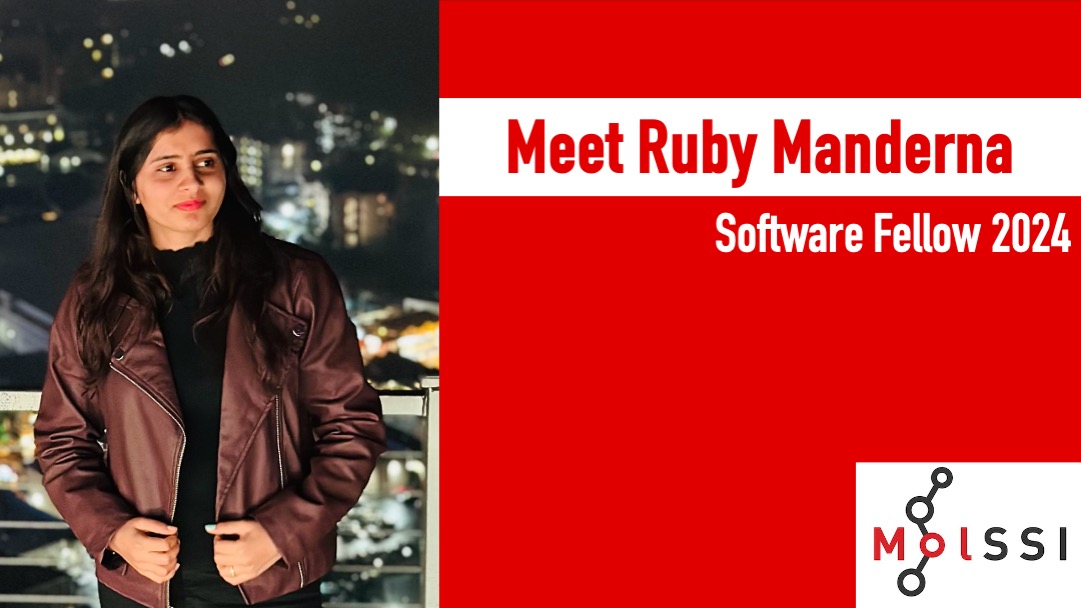
Exploring Polaritonic Chemistry: Ruby Manderna’s Research Journey
Ruby Manderna, a Ph.D. student in the Department of Chemistry and Nanoscale Science at UNC Charlotte, is working at the forefront of computational quantum chemistry. Under the guidance of Dr. Jay Foley, her research focuses on developing ab initio methods for polaritonic chemistry—a cutting-edge field that explores light-matter interactions at the quantum level. By refining computational approaches,
-
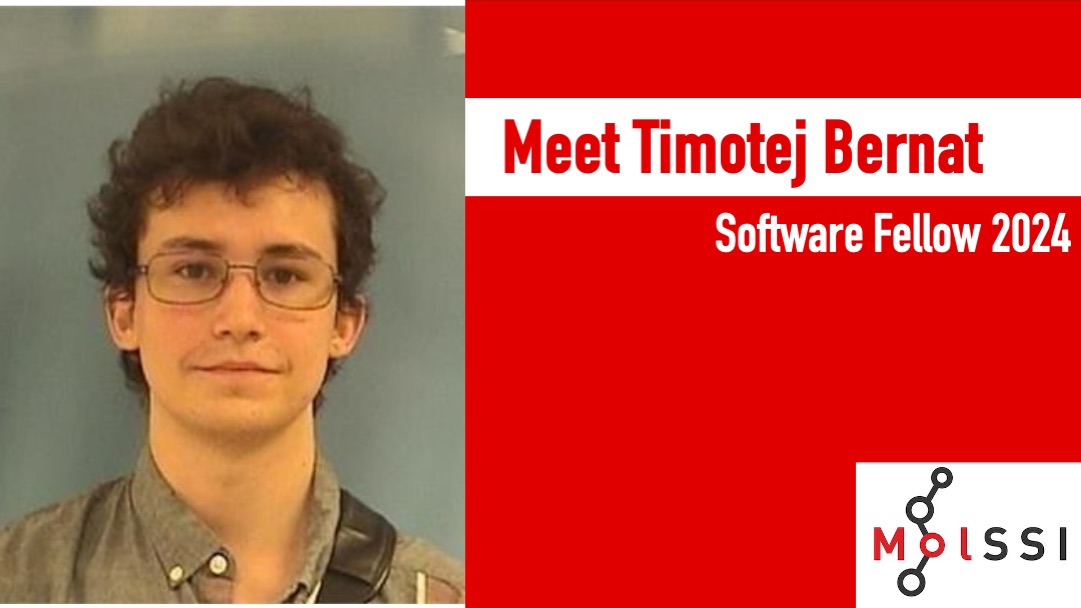
Timotej Bernat: Bridging Chemistry, Software, and Open-Source Innovation
Timotej Bernat, currently a PhD student at the University of Colorado Boulder under the direction of Prof. Michael Shirts, first became intrigued by computational chemistry during his undergraduate studies. After being introduced to organic chemistry, he found himself fascinated by the intricate, interconnected nature of the field. Once beyond the outward-facing veil of difficulty of